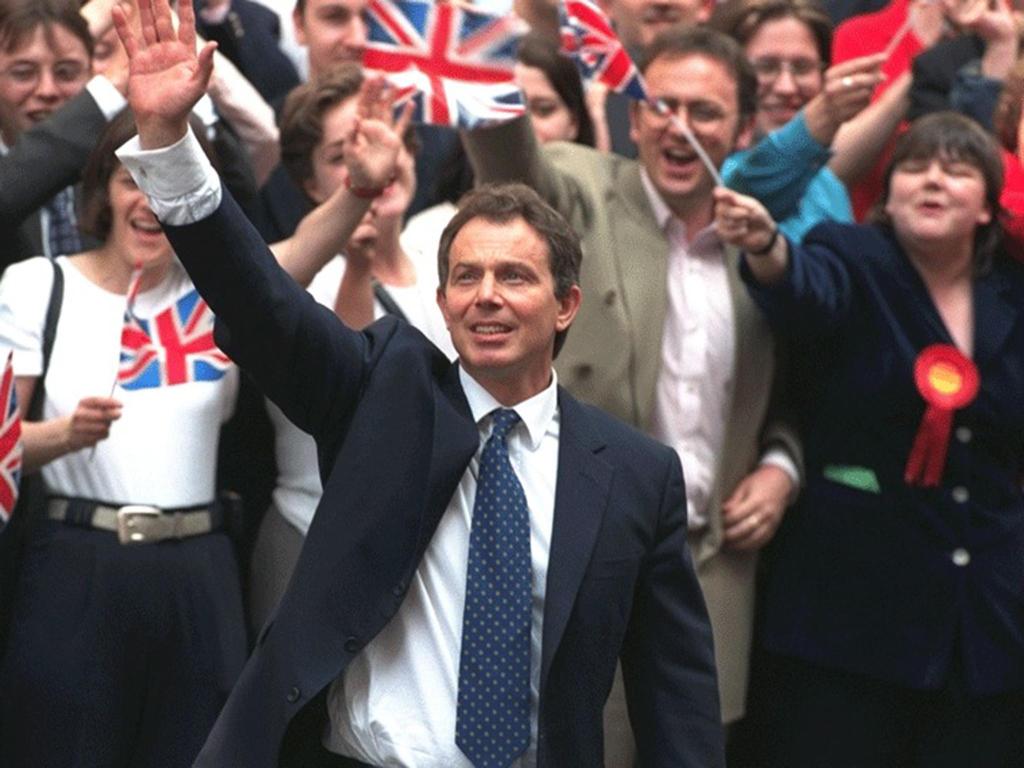
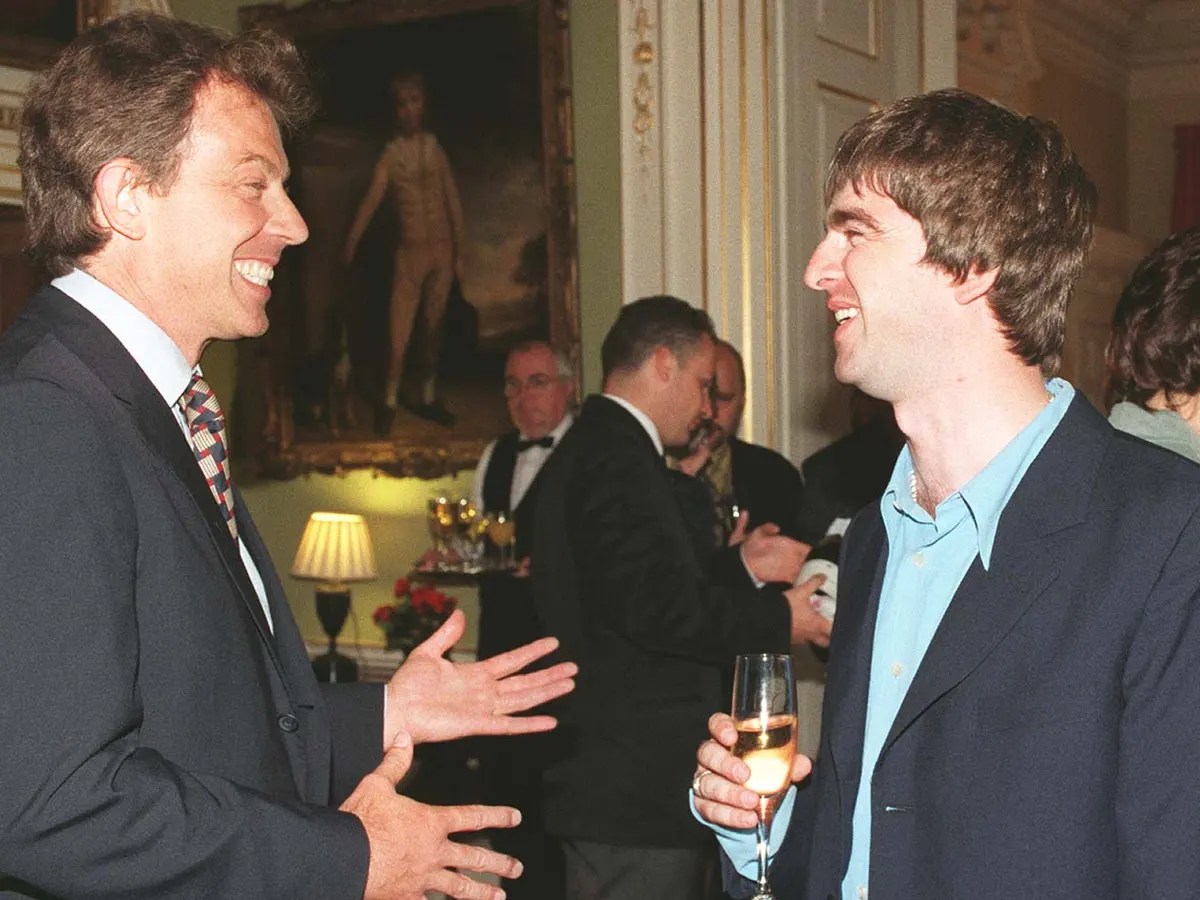
In the run up to the 1997 election, Tony Blair and New Labour harnessed the optimism brought about by the surge in British patriotism known as Cool Britannia in order to make their campaigns more appealing and relatable. By forging very public relationships with people like Alan McGee, founder of Creation Records, and appearing at various music award events throughout the mid 90s, Tony Blair undoubtedly earned a significant amount of voter support, managing to present himself as a young, ‘rock and roll prime minister-to-be’.
Blackpool Youth Conference 1996
Blair astutely employed Creation Records as a representation of New Labour in 1996. However, it wasn’t a random record company that Tony Blair chose to use as an example, but the one that Oasis, one of the biggest bands at the time, was signed to. After unsuccessfully pleading with the band to get them to perform at the Youth Conference in Blackpool, Labour managed to get Alan McGee there to hand Tony Blair a specially inscribed Oasis platinum disc. According to Politics Home, Peter Mandelson, Labour’s Director of Communications, even danced with McGee at the event.
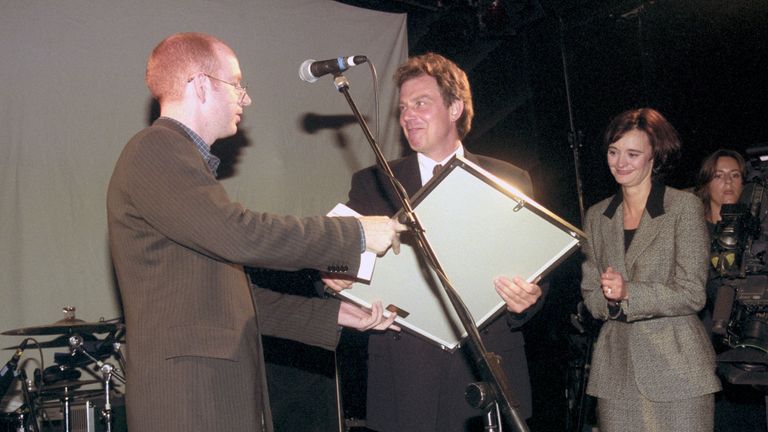
In his speech, Blair said “It’s a great company, you know, we should be really proud of it. Alan was just telling me it started 12 years ago with a thousand quid bank loan and now has a turnover of 34 million, and that’s New Labour.”
In endorsing Creation Records, Tony Blair was also aligning himself and his party with Oasis – a calculated move, considering the impact they had on the younger population of Britain.
1994 Q Awards
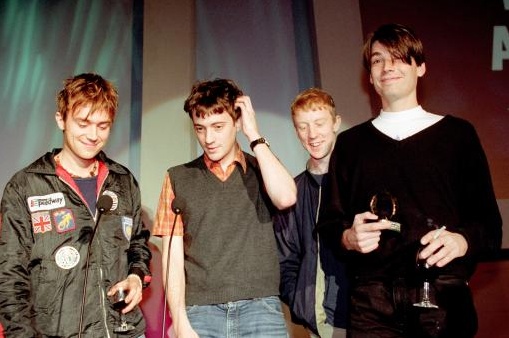
Both his attendance and his speeches at numerous music award ceremonies during the mid 1990s also played a major part in building Tony Blair’s image. At the 1994 Q awards, the first of these award ceremony appearances, he gave an opening speech in which he emphasised the importance of music and rock ‘n’ roll in British culture, while criticising John Major’s current government, portraying it to be oblivious and misunderstanding of said fundamental element of British life, and implying that, were he elected, he would do this better.
“Rock ‘n’ roll is not just an important part of our culture, it’s an important part of our way of life … It’s immensely important to the future of this country. In Parliament … If you had a debate about the music industry, they’d think it rather strange, but that actually just shows how far Parliament is behind the times.”
This address hinted that upon his rise to the prime ministership, certain attendees might gain access to governmental operations, as John Harris said. His speech assuredly established the idea that he was a friend of the music industry, and he used the next part of it to really prove his knowledge.
“The great bands that I used to listen to – The Stones and The Beatles and The Kinks – their records are going to live forever, and the records of today’s bands, the records of U2 or The Smiths and Morrisey, will also live on because they’re part of a vibrant culture.”
1996 Brit Awards
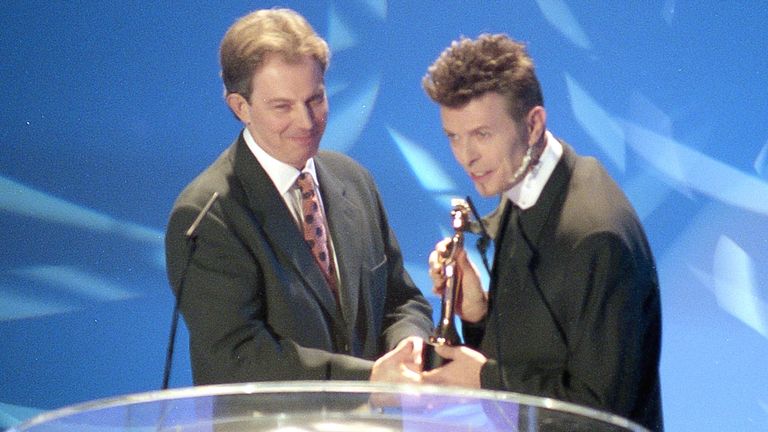
This theme of band enumeration became recurrent throughout many of his speeches at these events. At the 1996 Brit Awards, where Oasis found themselves on stage accepting awards no less than three times (beating Blur and Pulp in all three), Blair was introduced by host Chris Evans as “the foot tapping, pop loving, he’s got nice hair, Tony Blair!”, and his speech went like this:
“It’s been a great year for British music … British bands storming the charts. British music back once again in its right place, at the top of the world. And at least part of the reason for that has been the inspiration that today’s bands can draw from those who have gone before. Bands in my generation like The Beatles and The Stones and The Kinks. Of a later generation: The Clash, The Smiths, Stone Roses.”
All this, however, is a lead up to the award that he presented that night: David Bowie for Outstanding Contribution to Music. As the Independent recounted the night of the ceremony, Blair and Bowie were both “great admirers of each other”. At this same event, Noel Gallagher gave Blair an incredible endorsement:
“There are seven people in this room tonight who are giving a little bit of hope to young people in this country. That is me, our kid, Bonehead, Guigsy, Alan White, Alan McGee, and Tony Blair. And if you’ve all got anything about you, you’ll go up there and you’ll shake Tony Blair’s hand, man. He’s the man! Power to the people!”
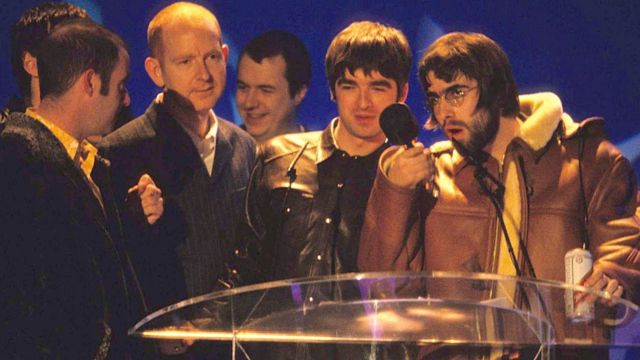
Gaining the public and sound support of figures as influential to both Britpop and the population as a whole as David Bowie and Noel Gallagher was undoubtedly another great win for Blair. As the Independent also said the day of the event, “now it’s Britpoppers for Blair”
Why did New Labour become so popular?
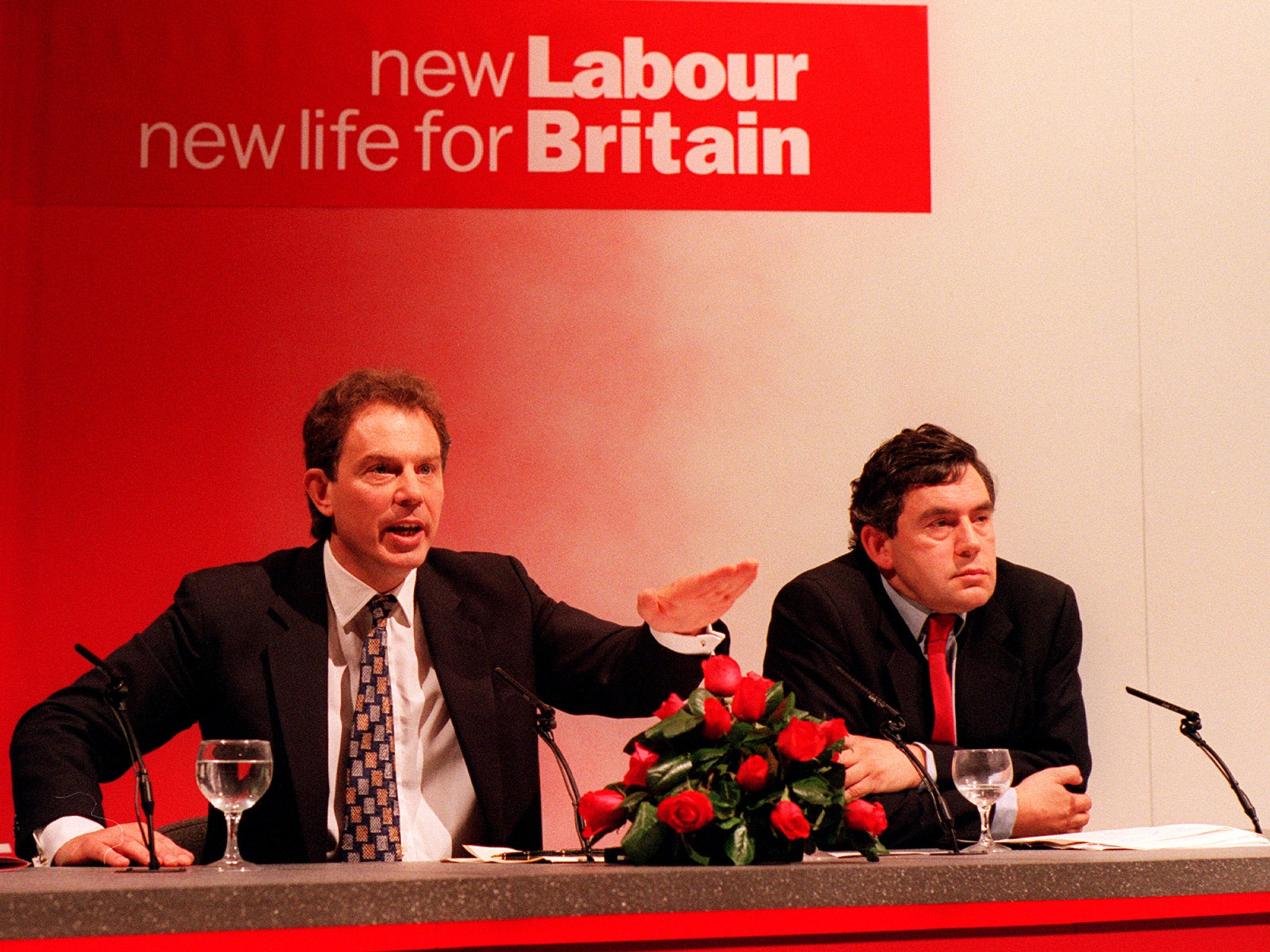
The fact that Tony Blair and the New Labour approach wanted to introduce some socialist ideas to Parliament matched perfectly with Britpop’s ideology. As the working class population was being brought into the mainstream through music and musicians, their lifestyle was celebrated rather than snubbed.
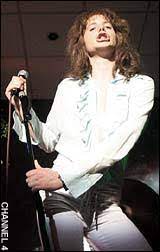
Tony Blair managed to harness the tremendous surge in patriotism occurring throughout the country in the 90s, particularly through music, to craft an image of himself as knowledgeable and in-touch: an endeavour largely aided by his own time in a band called Ugly Rumours while at Oxford, and, as per John Harris, “the idea that he had once been intimately familiar with amplifiers, guitar springs and the black art of executing a convincing Mick Jagger impression.”
The strategic assembling of these elements built his compelling image, garnering overwhelming voter backing and culminating in Labour’s landslide victory in the 1997 election.
 archive anecdotes
Leave a comment